
A PV datasheet tells you the cable is 1500 V DC. The installation tells you whether it needs UV resistance, torsion, a screen, an LSZH sheath or armour. These are the seven plant types we support most often.
Four questions determine most renewable cable specifications. We use them to move from a generic product family to the construction that belongs in the plant.
String harnesses, DC feeders and MV collection across an open site, with cable exposed to full sun and wide temperature swings.
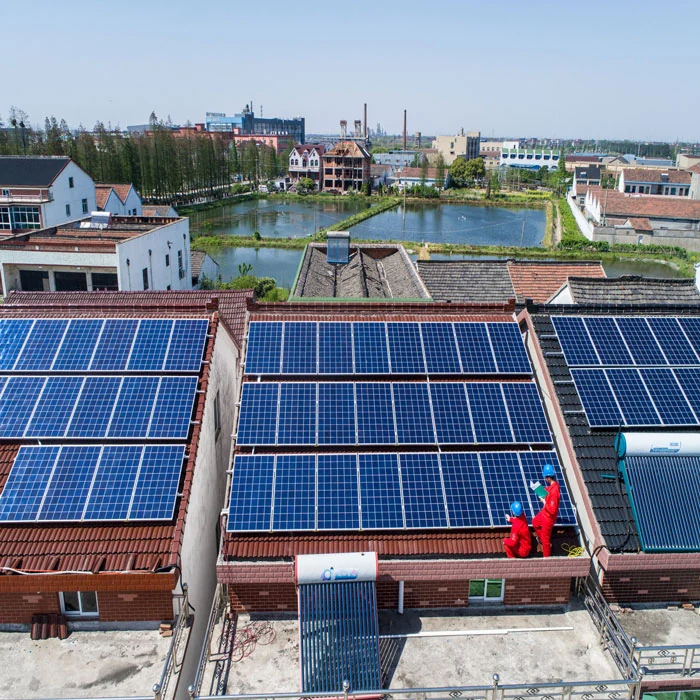
Recommended range →Confined roof routes and long cable trays where flexible conductor and a small bending radius decide the installation.
Recommended range →Nacelle-to-tower loops and pitch runs on turbines that yaw continuously in a −40 °C to +50 °C ambient.
Recommended range →The same torsion duty with salt-laden air, higher humidity and a maintenance visit that costs more than the cable.
Recommended range →Containerised BESS where DC connections cycle continuously and the enclosure environment demands LSZH performance.
Recommended range →Single-axis trackers with a daily rotation cycle, where the moving joint is the first place a standard PV cable fails.
Recommended range →Module frames, tracker piles, inverter stations and the plant earthing grid, bonded with tinned copper.
Recommended range →The same 1500 V DC cable behaves differently on a roof, at the inverter and on a mounting frame. The route decides the construction.
| Utility-scale PV plants | PV1-F DC cable for strings, H1Z2Z2-K for harnesses and MV collector cable for the plant network. |
|---|---|
| Rooftop and distributed PV | Flexible Class 5 DC cable with a small bending radius and UV-rated sheath for exposed roof routes. |
| Onshore wind farms | Torsion-resistant power and control cable for nacelle, tower and pitch runs, rated to −40 °C. |
| Offshore wind | The same torsion construction with a PUR sheath and optional braid for salt-air and vibration duty. |
| Battery energy storage | Class 6 tinned copper DC cable with LSZH sheath, plus screened pairs for BMS communication. |
| Solar tracking systems | High-flex, torsion-capable DC cable supplied as cut lengths or pre-assembled tracker harnesses. |
| Earthing and lightning protection | Tinned copper earthing conductor from 16 to 120 mm² for frames, piles and station bonding. |
Send us the plant description, the system voltage, the route and any environmental classification. We will map it to a construction and explain the trade-offs.
We will recommend the cable family and construction, then quote the exact specification.